Africa’s power gap: challenges and opportunities for electrification
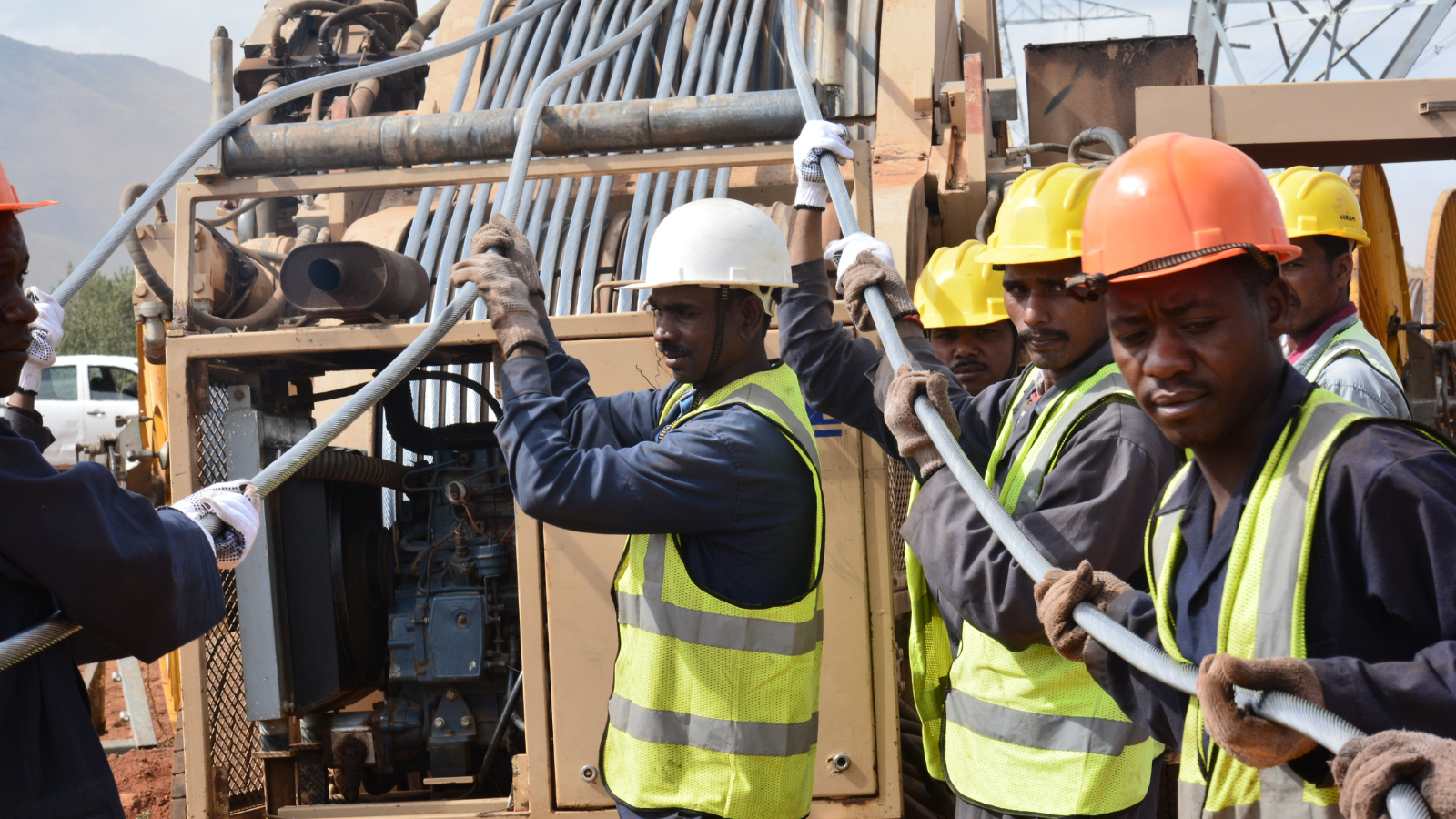
Africa’s energy landscape stands at a critical crossroads. Despite its vast resources and its growing prominence within the global energy agenda, the continent remains the least electrified, with 600 million people still lacking access to electricity.
Despite recent progress, the continent continues to face significant challenges, from inadequate financing to rapid population growth. In response, African countries are increasingly turning to decentralised energy solutions and new forms of partnership. Yet, universal electrification will ultimately depend on Africa’s ability to mobilise sufficient, predictable, and long-term financing.
About
Nathan Dérédec is a consultant at Concerto. He specialises in economic intelligence and politico-economic issues in Africa. Contact Nathan at nd@concerto-pr.com for more information.
QUICK INSIGHTS
- While nearly 600 million Africans still lack access to electricity, the pace of progress has slowed in recent years due to economic downturns, rapid population growth – around 2.5% annually – and insufficient financing.
- Small-scale renewable projects – particularly off-grid solar and mini-hydropower – are emerging as the most effective and affordable means of expanding electricity access across the continent.
- Beyond multilateral initiatives such as Mission 300, achieving universal electrification in Africa will require closing major financing gaps through stronger coordination and investment mobilisation.
Africa’s electricity access, between persistent inequalities and structural challenges
Despite recent progress, around 600 million Africans remained without electricity in 2024, according to the International Energy Agency (IEA). This challenge is concentrated in sub-Saharan Africa, where electrification reached about 53% in 2023 – ranging from 94% in Gabon to just 5% in South Sudan – compared with over 99% in North Africa. Progress has slowed in recent years, reversing earlier gains due to the pandemic’s economic impact, supply chain disruptions, and mounting public debt. Outdated and underfunded infrastructure also hinders progress, with transmission losses rising to 24% in 2023, up from 14% in 2022, according to the World Bank.
The continent’s rapid demographic growth – around 2.5% annually – exacerbates these difficulties. In some countries, population growth outstrips electrification, leading to stagnation in the absolute number of people with access to electricity. The IEA estimates that only around 16 million people in the region gained access to electricity each year between 2019 and 2024. At this rate, 520 million sub-Saharan Africans could still lack electricity by 2035, out of a projected population of 1.8 billion.
Closing the gap requires much faster and better-financed electrification. The IEA estimates that achieving universal access in Africa by 2035 will require around USD 15 billion annually for generation, grids, and decentralised solutions. Yet in 2023, less than USD 2.5 billion was committed to new access projects, and funding remains uneven, with nearly half flowing to just six countries: Angola, Kenya, Mozambique, Nigeria, Senegal, and South Africa. Moreover, most financing targets urban centres, even though around 80% of those lacking electricity live in rural areas. Without structural reforms and substantial new investment, Africa’s power deficit will continue to widen.

Sources: World Bank Group, IEEE Spectrum
The growing role of small-scale renewables in advancing Africa’s electrification
Fossil fuels still dominate Africa’s electricity mix. In 2024, nearly 75% of the continent’s electricity came from fossil sources (43.4% from gas, 24.5% from coal) while just 25% derived from clean energy, mainly hydropower (16.6%), solar (3.7%), and wind (3.2%), according to energy think tank Ember. Although well below the global clean-energy average of 41%, renewables continue to grow, with small-scale systems offering significant opportunities to expand electrification in rural and underserved areas.
Africa’s solar potential is immense, yet installed capacity reached only 21.5 GW in 2024 despite the continent hosting 60% of the world’s highest-quality solar resources, according to UNCTAD. However, even with a 70% drop in global solar costs over the past decade, financing remains insufficient. This has accelerated interest in decentralised solutions, largely driven by private operators. The World Bank now identifies off-grid solar as the most cost-effective option for first-time electricity access, representing 55% of new connections in sub-Saharan Africa between 2020 and 2022. Distributed solar is expected to account for 42% of the continent’s solar growth in the next five years.
Hydropower remains Africa’s backbone renewable resource, supported by vast but mostly untapped potential. In Ethiopia, it supplied 96% of electricity in 2023. Beyond major projects such as the 5,150-MW Grand Renaissance Dam, inaugurated in 2025, small and medium hydropower plants are gaining momentum. The UN highlights small hydropower as a simple, low-cost technology suited to remote communities. Initiatives like Nyagak III in Uganda (6.6 MW) and Kabu 16 in Burundi (20 MW), together with a growing number of projects developed through public-private partnerships, illustrate this trend. Yet climate change increasingly threatens hydropower reliability and long-term output.
Financing gaps require better investment mobilisation and coordination among public and private actors
To address electricity shortages, the World Bank and the African Development Bank (AfDB) launched Mission 300 in 2024, aiming to connect 300 million people in sub-Saharan Africa by 2030 – half of those currently without power. The World Bank, which seeks to connect 250 million people, intends to mobilise USD 30-40 billion, while the AfDB, which aims to connect an additional 50 million people, plans to mobilise USD 10-15 billion. The initiative also seeks up to USD 90 billion from private investors, development banks, and philanthropies. Several lenders have pledged support, including the Islamic Development Bank (USD 4.6 billion) and France’s AFD (USD 1 billion). As part of Mission 300, 29 African countries have adopted National Energy Compacts to fast-track reforms and access concessional funding. So far, the initiative has mobilised USD 8.5 billion and connected 32 million people. World Bank projects currently underway (planned or approved) are expected to connect an additional 157 million people, bringing the total to 189 million towards its 250-million-connection commitment. Yet it remains highly ambitious, requiring power to reach 4.2 million people each month to meet its 2030 goal fully.

Private investment is also increasing. In October 2025, the Central African Republic signed a USD 2.1 billion grid-modernisation deal with US firm SmartEnergy, while Nigeria concluded a USD 200 million partnership with pan-African company WeLight for renewable mini-grids earlier in the year. Firms such as Bboxx, M-KOPA, and Renewvia Energy also provide off-grid systems, though still at a limited scale. Yet efforts remain fragmented, and regulatory uncertainty, unclear tariffs, and weak project bankability constrain private capital.
Strengthening project viability and developing local capital markets could help Africa mobilise more private capital for its renewable energy ambitions. The lack of equity financing forces companies to rely on debt or results-based schemes, limiting expansion. In parallel, scaling up concessional finance to de-risk projects and direct capital to underserved areas is essential. Tools such as securitisation, energy-as-a-service models, and green bonds can also help mobilise financing. Ultimately, progress will depend on coordinated action between governments (stable regulation), multilateral institutions (concessional de-risking), and private actors (project development and financing) to achieve universal electrification in Africa.
Source: Our World in Data
Découvrez nos autres case studies

Strategic communication
Showcase the expertise of an international supplier of ICT services

Track II diplomacy
Increase the visibility and raise the profile of a pan-African institution
Strategic communication
Promote the image of a Central American country
Strategic communication
Increase the influence of a pan-African logistics infrastructure company and raise its profile